Saturday, April 29, 2017
Tech Tip: Weather Widget
Well, with all the crazy flooding and rainy weather happening lately I decided to add a weather widget to my blog. It was super easy and here are the Instructions on how to add your own.

Thursday, April 27, 2017
Storytelling Week 14 : The Awakening of Narayan
 |
| Hindu deities who arrive with Narayan's awakening. |
Ananta and Adi Sesha were sister serpents who were the masters of time. One was known as the primal and the other as the endless. So together they were the beginning and the end but never stopping.
They would glide around the ocean of milk with Narayan as he napped in their embrace. If he was napping, the world was silent. The ocean was calm; their job was easy. They had no worries.
When Narayan awoke, however, many things would happen. He would change so that he could be with his people and creatures of the world. He would become Vishnu, protector, and guardian of the world.
He did not need the care and protection of Adi and Ananta, but they were still needed for the world. Since they were the masters of time without them, time did not exist.
Adi and Ananta never knew when Narayan would wake. They only knew that the day the sea started to churn, his eyes would open.
They did not have much to do once Narayan was awake, but they had much more entertainment.Narayan, as Vishnu, would bring many creatures into the world with his awakening.
The goddess of wealth and his consort, Lakshmi would appear first. Sometimes she would be there as the cosmic cow, Go-Mata. They much preferred to see her as Lakshmi, but both were the same soul.
Brahma would sprout from a lotus flower as if he was giving birth to Vishnu. His job was to organize the world as Narayan sees fit at that time.
Shiva is the one who can destroy the world when he closes his eyes. His mind refreshed from the cycle of sleep and ready to try again will step forth with his family, eyes open wide.
Parvati, Shiva’s wife and goddess of love and devotion, will be brought forth along with their two sons. She will be there to spread her love across the world.
Ganesha, with the elephant head and exceptional intellectual capacity and his six-headed brother, Kartikeya with his great physical capabilities will be able to solve anything together.
Garuda, the cosmic hawk and a natural predator of serpents is brought forth as he is the protector of Narayan in Vishnu’s form. The cosmic hawk has a heavy responsibility which Adi and Ananta respect him for doing. They do not fear this hawk.
Hanuman the monkey will be brought forth. Hanuman is also known as sankat-mochan or the trouble-shooter. He too is a protector of Vishnu in his many avatar forms in the world. When he is present Adi and Ananta know that Narayan will be safe because when troubles are created, he will help find solutions.
The dueling musicians will be there to sing their praise to Narayan’s awakening. The horse-faced Tumburu, playing his lute will entice everyone to enjoy the new world, while Narad plays his lute, envious of Tumburu’s skill. This possessiveness and envy will ignite the troubles that Hanuman will help to squelch one day.
I based this from Chapter two of “7 Secrets of Hindu Calendar Art” retold as a video book by Epified on YouTube. This chapter is about Hindu beliefs of creationism. As we have learned throughout this course, Hindus do not believe in one life. This chapter describes an image that is a symbol of their beliefs about the cycle of life. Adi and Ananta are two different names that the serpent is referred to but I decided to make them siblings since the serpent has multiple heads. I chose the same image so that you could see the characters as I described them in my story.
Bibliography:
Wednesday, April 26, 2017
Tech Tip: Canvas Mobile App
I received a notification via email that an assignment was graded in another class but there was no way to see the score or read my feedback. So I decided to try out the Canvas mobile app. I also have the D2L mobile app installed so I didn't expect to get much satisfaction from the Canvas app, but hoped I could at least view my score. Wow! I was surprised. It was easy and quick to install without any problems. The mobile app is very versatile and I love that I can color code my classes. I could access all areas of Canvas extremely easy including the feedback from my instructor on dropbox assignments. I honestly like the mobile app more than I like Canvas on my internet browser. I highly recommend it.
Reading Notes : Pattanaik's Calendar Art: Part B (Narayan) by Epified TV
Epified introduces 7 Secrets from Hindu Calendar Art by Devdutt Pattanaik as a Video Book
 |
| Hindus believe in rebirth, death is only a comma. |
Hindus believe in rebirth unlike Greeks(conquer) Muslims(surrender) and Christians(save), so when Narayan(God) sleeps, the world doesn’t exist. When he wakes it is reborn.
Ocean of milk which is what everything comes from – Ocean of Possibility, Just a glob of matter waiting to be formed***so much science even though it isn’t
Narayan is on a serpent – Sesha the only thing leftover after everything is destroyed(time) ***Adi Sesha The Primal Remainder or Ananta Sesha The Endless Remainder
Story of two serpents Adi and Ananta
Narayan is an observer and when he sleeps he doesn’t observe – another way the world doesn’t exist
My world vs the world, even now when we sleep our world exists but we don’t experience it so my world doesn’t exist
Totally the chicken and the egg
Lakshmi is Narayan’s consort, she is goddess of wealth and cosmic cow – Go-Mata
When Narayan is awake he is Vishnu – protector, guardian, preserver
This tells the story of Narad and Tumburu who want to win Lakshmi(when she is an avatar on earth) as a prize, and ask Vishnu for help. He helps, but because he actually loves her for the right reasons, she always chooses him.
Creation is subjective realization.
Banyan trees are immortal along with souls
Hindu idea of God is that God is ALL things, in and outside of them, he is she, he and she are also it, animate and inanimate, all things are God. Human, subhuman, superhuman. God is formless and expressed through all forms. Everything we see is God, all we sense is God, God is within us and around us. God is all there is. We can be God too but because of our limitations, egos, science, need to understand instead of just believe.
Bhagavad Gita says that if we break free by living life, struggle with rules, moralities, and ethics that the world subscribes to with the knowledge that death is not the end. We will be reborn to try again.
Hindus have no sense of urgency or a need to be a hero because of their cyclical belief of life and death. The discovery of the observer- the one who creates the world – is the purpose of life.
Bibliography
7 Secrets Hindu Calendar Art - Chapter 2 Narayan's Secret by Epified
Monday, April 24, 2017
Reading Notes : Pattanaik's Calendar Art: Part A (Ganesha) by Epified TV
Epified introduces 7 Secrets from Hindu Calendar Art by Devdutt Pattanaik as a Video Book
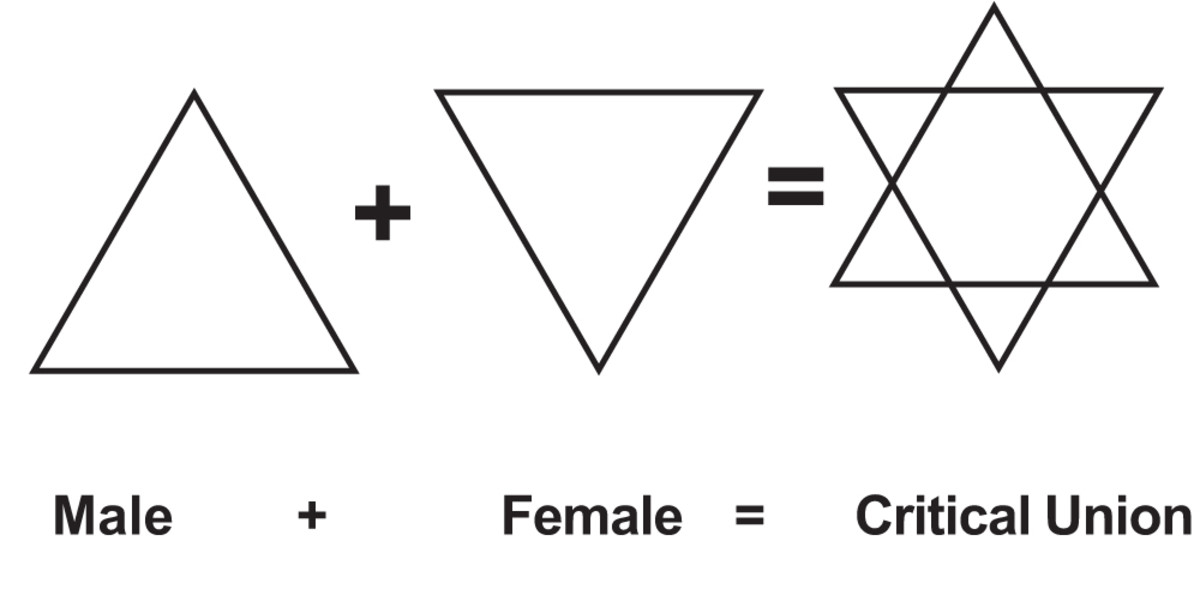 |
| Hinduism requires both a male and female for creation Source:Web |
I like that in Hinduism it is compared to Christianity instead
of a singular idea, there are gods and goddesses that fit into a jigsaw puzzle
called God.
My world versus “the world” question is food for thought.
Subjective versus objective is important.
In the Hindu world, God is not a singular entity or
masculine.
Shiva and Parvati (wife) are equals(Gods), their children, Ganesha
and Kartikeya are lesser(gods). Shiva is the destroyer and God because if he
closes his eyes the world ceases to be. Parvati embodies all emotions. Makes me think that females are depicted as emotional and males as being
strength(this is in all cultures I have read about thus far).
Ganesha, Kartikeya, or any divine god worshiped alone, can then be considered a God in that place.
Brahma created Vedas by transmitting them to Rishi, Vyas,
but in Hinduism man cannot exist without woman, not even the gods. The
transmission itself is the Veda-Mata goddess.
Life is incomplete without 4 goals – Dharma, Artha, Kama,
and Moksha…Kama are the pleasurable pursuits.
For Hindus, it is okay to worship a man who has transformed
earth into paradise. They are not just considered a saint like in Christianity,
but an earthly manifestation of god.
Parrot and Lotus associated with Kama, Hindu cupid.
Bahuachara goddess of many behaviors, tolerant of hijras,
those who seek gender fulfillment(Male Indian transgenders). They live outside
society, castrate themselves and pray to her. Stories say she once turned a
woman into a man so she could marry another woman since they had been betrothed
without knowing that they were both females. Hindus believe in reincarnation so they pray to Bahuachara
for their next life to be a complete man or woman.
They even have universal goddesses – Annapurna the kitchen
goddess to stave off the fear of starvation which is a fear for everyone.
Parvati wanted kids, but Shiva didn’t. She breathed life
into a doll of turmeric paste she washed off of herself. Shiva once cut its
head off when he wouldn’t let him in the house. Shiva then replaced the head
with the immortal head of the elephant of the rain god Indra’s elephant making
Ganesha. Thus making a union of Shiva and Parvati and showing the struggle and
balance possible between life and family.
Bibliography
Monday, April 17, 2017
Wikipedia Trail
 |
| Snakes and Ladders Author - NoMan Source - Wikimedia Commons |
I want to play this game!
Snakes and Ladders Snakes and Ladders was a board game in India. The game Chutes and Ladders originated from this game. Snakes and Ladders were based on virtues and vices, virtues being the ladders, vices being the snakes. Apparently, Chutes and Ladders had morals in the game, but I do not ever remember learning anything like that when I played it as a kid or with my children over a decade ago. I think Snakes and Ladders would have been much more interesting to play.
Midnight's Children Midnight’s Children was a book that was written in 1981 by Samuel Rushdie. It was about the transition of India from ownership by Britain to their own country. The characters were children. If the children were born on the day that India was emancipated, they had special powers. The book won many awards but also caused a lot of controversies.
Sanjay Ghandi Sanjay Ghandi was an Indian politician. His mother filed a lawsuit against the author of Midnight’s children because she felt falsely accused. He originally did not plan on becoming a politician, but instead wanted to be an automotive engineer. He even had an apprenticeship at Rolls-Royce. As he became more entwined in politics his automotive career took a backseat.
Maruti 800 The Maruti 800 was the first affordable car for people in India. It was about five feet tall, five feet wide, and almost 11 feet long. The gas tank was only 7.4 gallons and it could seat five people. It was manufactured from 1983 to 2014 but is only the second longest production car in India. Suzuki was the company that built it even though it was originally offered to Volkswagen so that it could be modeled after the beetle. Instead, it was modeled after the Suzuki Fronte.
 |
| That's a small car! Photo by Krishna Kumar Mishra Wikipedia |
Saturday, April 15, 2017
Tech Tip Week 12
Hey all, I tried out something new on one of my pages in my storybook. As you know, Google Sites has some limitations on changing some pretty basic things like the color of the font. I decided to work around this. I saved the image I found and added the text I wanted for the title in Microsoft's Paint program. I uploaded that new image into my Google drive and selected it as my background image.
Voila'! Click the link to see. Why The Dice What do you think?
Voila'! Click the link to see. Why The Dice What do you think?
Wednesday, April 12, 2017
Reading Notes Nala and Damayanti and Other Poems by Henry Hart Milman: Books VI-XI
 |
| My thoughts on a Representation of Damayanti sending her children away. |
Book VI
The gods depart Bhima’s daughter and new son-in-law happy and cross paths with Kali and Dwapara together. Those are the names of the third and fourth ages of the world when bad stuff was integrated into man. When Indra asks Kali where he is going, his response is to marry Damayanti. He is given the bad news. Knowing Kali is upset, he points out that since Damayanti chose a mortal in the presence of gods, any harm brought to him would bring great doom to the person who tried to hurt Nala. They reiterate why Nala is worthy of being protected and their marriage sanctioned by them(back to first book about how he is a good king who studies vedas and treats everyone good, etc.) ***Nala is in essence equal in actions to the gods who guard the earth which is why he is noble and good and worth endowment from the gods. Another warning, a curse placed upon Nala would be reversed back onto the person who tried to place it on him and be sent to hell. Then the gods exited. Kali tells Dwapara he can work around it by taking over Nala’s body with the assistance of dice enchanted by Dwapara.
Book VII
Kali and Dwapara silently haunt the palace of Nala waiting for an opportunity to take over Nala. It takes 12 years. Nala prayed with feet partially washed, which is unholy and allowed Kali to enter his body and take over his soul. In Nala he called for Nala’s brother, Pushkara, and asked to play dice. Dwapara enchanted the dice and Nala began to play. His city and people came to watch his strange behavior and ask him to stop but he did not. Damayanti asks Nala to stop but he ignores her. She tells the charioteer it is not Nala.
Book VIII
Damayanti asks her maiden Vrihatsena to go assemble the council to have them tell Nala what he has lost of the kingdom and what is left in hopes to bring him to his senses. It doesn’t work. So she asks her maiden to go to the charioteer Varshneya. She asks Varshneya to take her children to her father’s kingdom and told him he could go wherever afterwards. He went to Rituparna and serviced the king after taking their children to their grandparent’s palace.
Book IX
Nala has now lost everything. Pushkara wants to wager one last roll, Damayanti. Nala stops there, strips down to a vest and walks away. Damayanti follows him wearing one garment. Three days later and Pushkara threatens the kingdom that whosoever helps Nala will be killed. They left and lived on roots and fruits until Nala found three birds. He caught them with his vest but they flew away laughing. The birds spoke saying they were the dice and their job was complete; he was naked and left with nothing. Nala was embarrassed and felt bad for Damayanti. He told her all the different paths on the road which would take her to various kingdoms including her father’s so she did not have to live with him in this sorry state since she didn’t deserve it.
Damayanti replied in sorrow saying that she couldn’t bare to think of him alone worrying without her. She was there to help him through his hard times. Nala disagrees and says that he should be scolded and if he were in her place he would probably do just that. She says that he would only leave her if he was half of himself. If he keeps suggesting she go to her dad’s then they both should go.
Book X
Nala says no way, he is too embarrassed because their kingdom is mighty and he had a mighty kingdom once too until this big screwup. They shared her garment and went roaming pretty much starving because of what they could eat. They lay down to go to sleep. Nala mulls over everything he lost and whether or not to leave Damayanti. If he doesn’t leave she deals with distress and shame, if he leaves she might go home to daddy. Under Kali’s influence still he leaves after cutting the garment in half but he travels back to her. He goes back and forth though, his love able to bring him back until Kali finally takes his mind over enough so he leaves the cabin.
Book XI
Damayanti wakes up and cries out for Nala. She asks where he is and why he left her all alone breaking his promise to stay by her side when she never broke hers. Why won’t he make her feel better by showing himself? Then she says she won’t feel sorry for herself, but just for him since he is alone. She looked everywhere yelling that whoever the evil one is who possessed him shall get what’s coming to them. She gets caught by a snake who is killed by a hunter. She gave him her story while he gave her the up-down. She figured it out and wishes him dead out loud. It happened.
Bibliography
Wednesday, March 29, 2017
Reading Notes Nala Damayanti - Short Stories from Mahabharata - Animated Stories for Children by Geethanjali - Cartoons for Kids
Nala Damayanti - Short Stories from Mahabharata - Animated Stories for Children by Geethanjali - Cartoons for Kids
***This story is way different. Geared towards kids, so a lot is cut out. However, the beginning is useful and I might change intro of my storybook to include the once upon a time portion about a great kingdom Hastinapur and how Yudi and Draupadi come across Vyasa. I enjoyed this a lot though.
The story begins with very basic info of Pandavas and Kauravas, starting King Pandu. Talk about Dury’s jealousy and game of dice challenge. They walk in exile and suffer hardship, state that Yudi was depressed, and a sage crosses their path. He notices sadness. Yudi tells him that he blames himself for all their suffering, and so the sage offers a story of a King who lost his kingdom to a dice game also, but overcame the loss through sheer determination.
 |
| Possible Book that animated short was based off Source:Facebook |
Nala from Nishada and Damayanti from Vidarbha(heard of Nala and decided to marry him) Her dad arranged the swayamvara, but didn’t invite the ruler of planet Saturn, Lord Shani. Shani was mad and wanted to teach him a lesson. He changed all men to look like Nala. Damayanti prayed to Shiva and closed her eyes, picking out Nala.
Shani got mad. Hindu mythology period of Saturn is 7.5 years and all humans undergo great trauma during this time. Shani was going to create this phase in Nala. Once Nala didn’t clean the back side of his feet Shani took hold there. Nala tells Damayanti that he is going to visit Pushkara in his kingdom even though he was his enemy. They played dice and Pushkara let him win all games. Then they began betting, and he still allowed him to win. They bet their kingdoms even though Nala doesn’t really want to. Pushkara wins this time. Nala and Damayanti are booted out of the kingdom to the forest.
Damayanti tied her saree to his shawl. Under Shani’s control Nala cut the material while she was sleeping and left. Nala couldn’t forget about his kingdom or wife. Shani took the form of serpent Karkotaka and bit Nala. Nala changed form. Damayanti woke up scared. She worked as a maid in another kingdom. She prayed to Lord Shiva for 7.5 years while Nala cooked in another kingdom.
Lord Shiva tells Shani that his time is up and he is to leave Nala. Shani admits that he could never get Nala to forget about his kingdom or wife or misbehave. Lord Shiva comes to Nala in a dream with instructions. In Tirunellar he got in the holy waters to be rid of the form that Shani had inflicted upon him and Damayanti brought there by Shiva found him.
They went back and regained Nala’s kingdom. All gods blessed them. Shiva explained that Nala succeeded because he never veered from the path of righteousness and his wife is an example to all women. It was due to Damayanti that he got back safely.
Return to Yudi and gang who promise to stop worrying about a little bit of trouble in life.
Bibliography
Wednesday, March 22, 2017
Reading Notes Nala and Damayanti and Other Poems by Henry Hart Milman: Books I-V
 |
| Another Damayanti Swayamvara Source:Revolvy |
Nala is described in detail as a king of greatness. A
mighty(I assume strong) son, gifted with every virtue(high moral), handsome,
good with taming horses(important in later story). He is given title of the
head of all the kings of mortals, like the monarch(boss) of the gods. He is
well-read in the Vedas which is required of the kings in India. He is the best
representation of the human race.
Damayanti was the pearl of maidens. She was beautiful,
brilliant, bright, and graceful. How these are interpreted in the poem I am not
certain. She is not rivaled in her beauty among gods, yakshas, or mortal men.
Both being of such good virtues and beauty, were pictured as
a couple and praised around the other even though they had not met. Antsy Nala
tried to catch a glimpse and instead caught a hamsa who made a deal to talk
with Damayanti. The hamsa tells her their children would be perfect and their
union would be blessed. They were meant to be together. She asked the bird to speak
the same of her to Nala, thus beginning their courtship.
Book II
Damayanti became love sick and so her father ordered her
swayamvara.
A meeting was happening in the sky with Indra, Varuna, Yama,
and Agni but only two were in attendance. When they found out it was because
everyone was going to try to win the hand of Damyanti; they decided to try to
win her hand also. As the gods descended the sky they came across Nala. They
thought he was equal in looks to the god of love. They called him by name and
asked him to do their bidding.
Book III
Nala promised to help before asking what. He tries to decline their
request since he was also trying to win her love. The gods were not happy and transported him to her room.
Those in the room recognize his beauty and Damayanti asks for his name,
purpose, and how he got there. He does tell her his name, but that he
is the messenger of the gods which is how he could get in to the room, divine
intervention. He tells her that they desire to marry her.
Book IV
Damayanti tells him she has already fallen in love with him
and there is no changing her mind even though he lists off several
examples/reasons to pick a god. He also explains he cannot plead for his case
because of his mission, so she finds a way to work around this without getting
him in trouble. She also instructs him to tell the gods that she has already
picked him as her suitor.
He gives this information to the gods and tells them that
she welcomes them to the swayamvara proclaiming the judgement is left in their
hands.
Book V
More descriptive section of her entering the room and
finding the gods and Nala all looking the same. The dialogue she uses includes
words with the Hamsa(swan), how she already pledged to love Nala, she asks the
gods to show themselves.
In this the gods hear her sadness but also true resolve to
find the real Nala, decide to reveal their traits thus making her able to
figure out whom to choose. Nala pledges his love to her since she chose him in
front of gods among other reasons.
The gods are truly happy and give Nala a total of eight
gifts and returned to the heavens. It also describes how he continues to be a good
person and that they had a son and daughter.
Bibliography
Sunday, March 19, 2017
Week 8 Review
My favorite post for Week 8 was on Thursday, March 9th. I loved watching the Grammar Rock videos, but Conjunction Junction was my favorite. “What’s your function” is currently stuck in my head. I need to thoroughly review their functions though because I know I am lacking in proper grammar at times.
On a side note, I am horrible at backing up my work. I always save a local copy on my computer, but just pray that I don’t ever have to worry about my work being “lost.” So, it was weird to think that I needed to back up what was already published online. So, now I have more local copies to hope I won’t lose. I really should just invest in a portable hard drive but for now, I will continue to test my luck and cross my fingers.
Tech Tip: Sidebar Box
Hey. everyone.
I have added a quick introduction to the characters "talking" and being mentioned in my Storybook introduction as a sidebar widget. It can be read on any page of my blog, including my comment wall. The main characters of the storybook are not those used in the introduction which is why I have and will not include more background information. If anyone else has burning questions from their readers, I highly recommend using this option as a way to answer all.
I have added a quick introduction to the characters "talking" and being mentioned in my Storybook introduction as a sidebar widget. It can be read on any page of my blog, including my comment wall. The main characters of the storybook are not those used in the introduction which is why I have and will not include more background information. If anyone else has burning questions from their readers, I highly recommend using this option as a way to answer all.
Tuesday, March 7, 2017
Week 8 Growth Mindset
 |
| Growth mindset - Maybe I can take flight Source: Maria Mar(Shaman and Spiritual Teacher) |
As stated in my introduction, completing my degree has been a long process. During this time is how I learned my best strengths. This class will help me in both learning new things and the learning portion. I am in an Information Studies degree program, so I have no career need for creative writing or the Indian Epics and Indian culture. However, writing is required in all of my classes. This will be a way to improve upon that facet. Also, I had not created a blog or Google site until this class, which could be applicable to my degree program and field once I graduate, so this is good practice.
I love that on our storybooks we have a revising week, and that we receive peer reviews. This will help me loosen my grip on always trying to get it right the first time, especially since I wait till the last minute to do things. Sometimes I choose what is easy by sticking to what I know, such as always writing in first person. This class and the topics allow me to stretch myself, which is what I am trying to do with the storybook. Plus, I am not really an imaginative person. Maybe I was when I was young, but for sure, I am not one now. So, maybe all this reading stories and retelling in my own words is reigniting something long lost.
Image Source: Maria Mar Artspiration No 59
Image Source: Maria Mar Artspiration No 59
Subscribe to:
Posts (Atom)